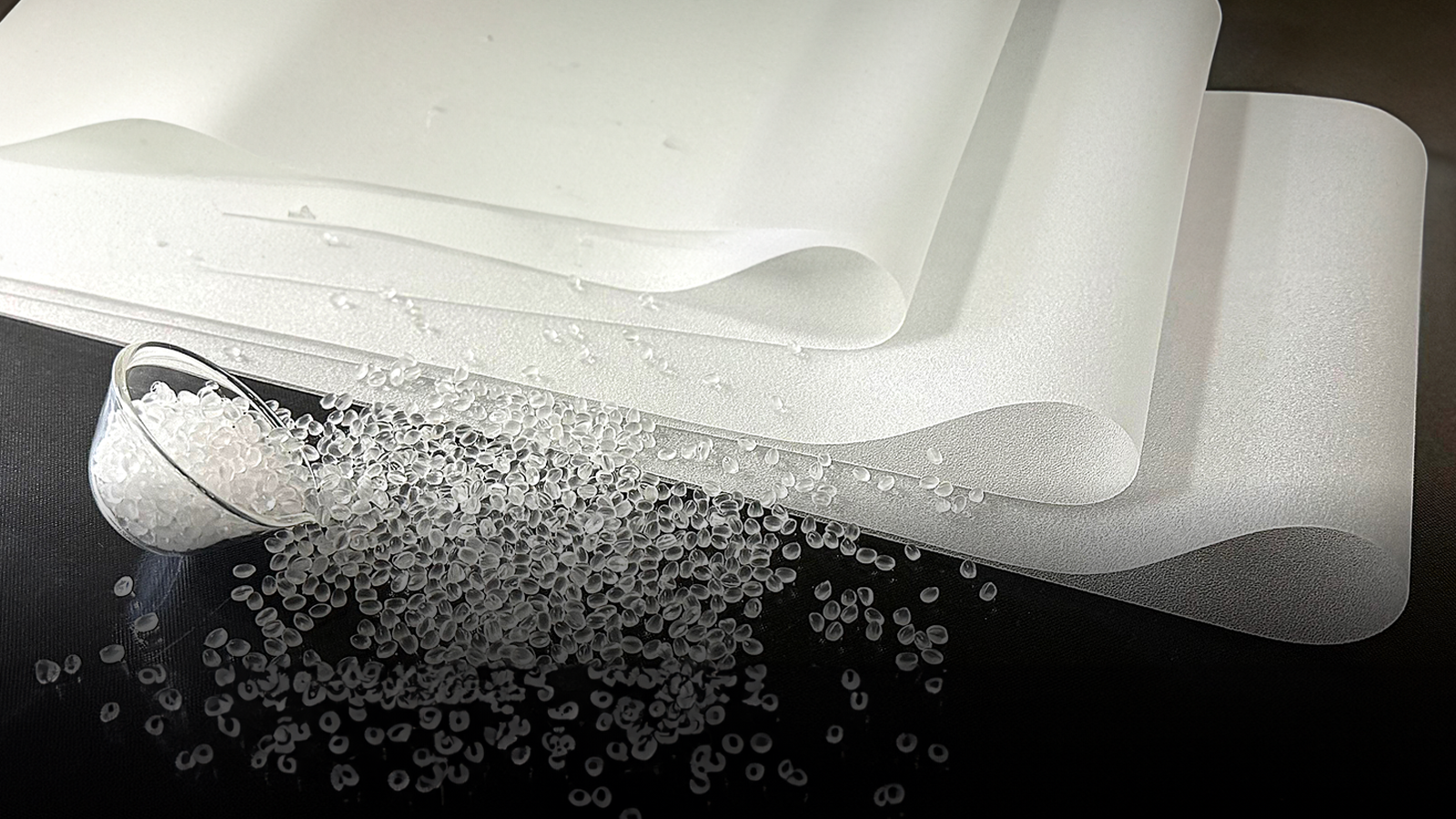
As the solar industry advances, the choice of encapsulation materials fundamentally determines the performance, reliability, and economic viability of photovoltaic modules. As performance requirements intensify—from high-efficiency cells to extended warranties—module manufacturers must understand the three primary encapsulation materials.
Ethylene Vinyl Acetate (EVA) is a copolymer of ethylene and vinyl acetate (VA), with VA content of 28% for solar use. Higher VA enhances flexibility and adhesion; lower levels increase strength. Its structure combines ethylene’s durability with VA’s polarity, giving EVA optical clarity, mechanical flexibility, and ease of processing. During lamination, it crosslinks at 140–145°C into a thermoset, with optimal gel content (80–90%) and fast-cure grades processing in as little as 13 to 15 minutes.
Polyolefin Elastomer (POE) is a copolymer of ethylene and alpha-olefins (typically 1-octene), featuring a branched structure that provides excellent elasticity and thermoplastic properties. Unlike EVA, POE’s non-polar hydrocarbon composition avoids acid formation, offering superior chemical stability. It has a much lower water vapor transmission rate making it ideal for moisture-sensitive technologies like TOPCon and HJT. With resistivity over 10¹⁵ Ω·cm, POE also offers strong electrical insulation and reduces PID by about 70% compared to EVA.
EVA-POE-EVA (EPE) is a trilayer encapsulant that combines EVA’s strong adhesion with POE’s superior moisture barrier using coextrusion. Its typical 1:2:1 structure places EVA on the outer layers for adhesion and POE in the center for protection. EPE balances performance and cost, offering improved PID resistance, and strong compatibility with glass and backsheets, while maintaining good electrical insulation and sealing.
The encapsulation market demonstrates clear evolution from EVA dominance toward diversified material adoption. Market share analysis indicates EVA declining from 69% in 2021 to 42% in 2023, while EPE grew from 11% to 27% over the same period. POE maintained steady growth from 20% to 31% market share.
Industry standards including UL746A & UL746B establish baseline performance requirements for all encapsulation materials. However, advanced cell technologies often require performance levels exceeding these standards, particularly regarding PID resistance and moisture ingression limits.