

The global solar market is analyzed across five regions: Europe, North America, Asia Pacific, Latin America, and Middle East & Africa.
Source: The Fortune Business Insights
The global solar energy market was valued at USD 121.99 billion in 2024 and is projected to reach USD 389.86 billion by 2034, with a CAGR of 12.32%. Asia Pacific leads, powered by urbanization, strong government backing, and surging energy needs in countries like China and India. Growth is propelled by expanding renewable adoption, advances like AI, and favorable policies, despite persistent challenges such as high upfront costs. Industrial usage dominates, while residential installations are rising due to increased incomes and subsidies
Source: Precedence Research
Despite its rapid growth, the solar industry faces several key challenges. High upfront costs remain a barrier for many small businesses and homeowners. The intermittent nature of solar power requires better energy storage solutions to ensure reliable supply. Supply chain issues and fluctuating tariffs add to project costs, while outdated grid infrastructure and regulatory delays slow deployments. Policy uncertainties in major markets also pose risks. Overcoming these hurdles with innovation, improved policies, and infrastructure upgrades is vital to keep the solar revolution on track.
Source: Goldman Sachs Research
Governments worldwide are accelerating solar growth by combining financial incentives, regulatory support, and infrastructure development. The US offers federal tax credits through the Inflation Reduction Act, Europe uses feed-in tariffs and mobilizes over €100 billion with the Clean Industrial Deal, and China has invested €44.3 billion since 2011, achieving major cost reductions. Policies like feed-in tariffs and net metering ensure stable pricing and grid integration, while renewable purchase obligations push utilities to adopt solar. In the first half of 2025, global renewable energy investment hit a record $386 billion, with the EU investment rising 63%. These efforts secured 597 GW of solar installations in 2024, and projections show annual deployment could reach 1 TW by 2030.
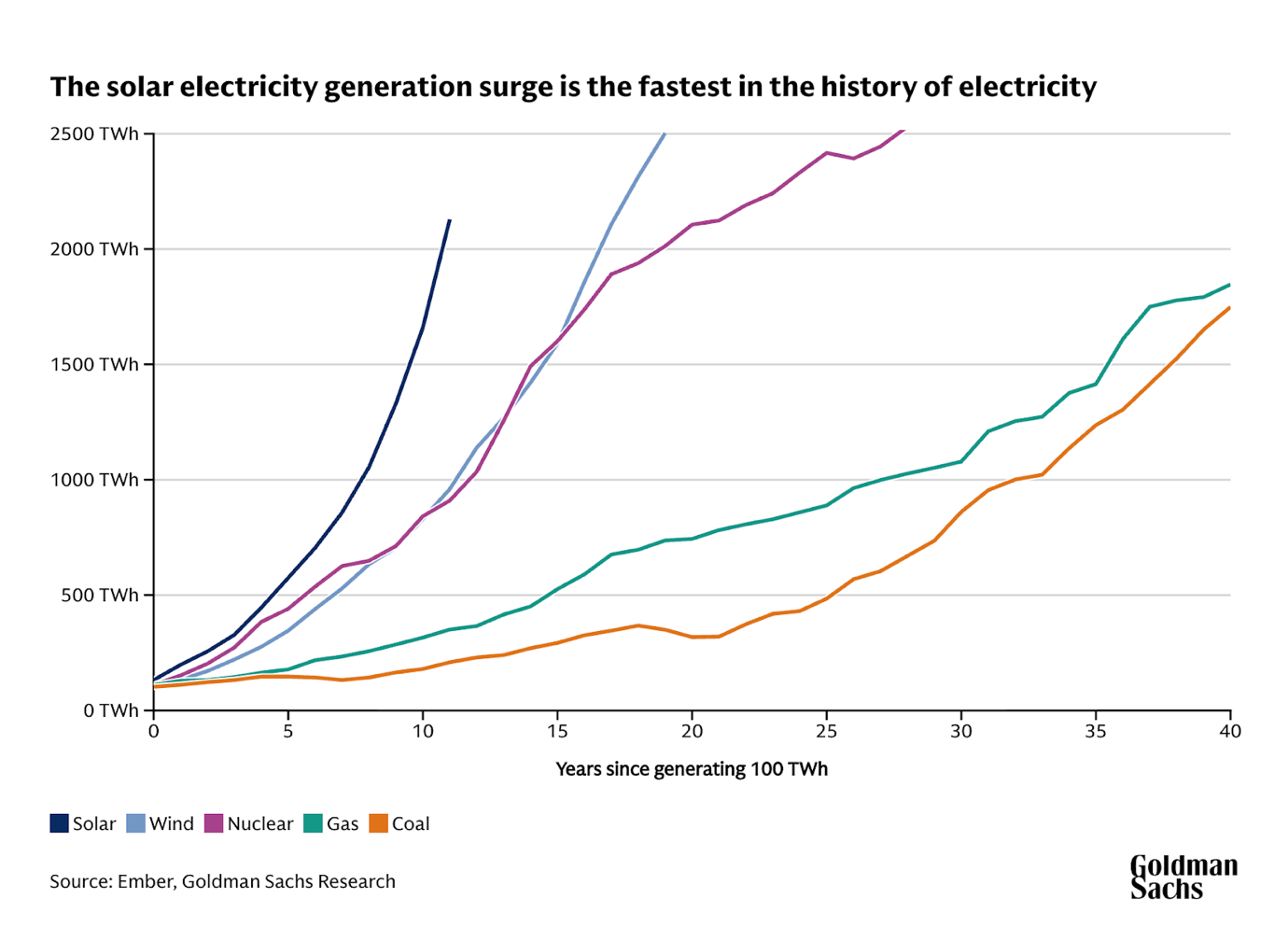
The solar industry has transformed from niche technology to the world’s fastest-growing electricity source. With record 597 GW installations in 2024 and projections of 1 TW annually by 2030, solar represents a fundamental shift toward sustainable energy systems.
This growth trajectory, driven by expanding manufacturing capacity, declining costs, and supportive policies, positions solar at the center of the global energy transition. For stakeholders across the value chain, this presents enormous opportunities in one of the most dynamic industries of our time—creating jobs, economic value, and the foundation for a sustainable energy future.
Sources:
Deloitte Research Center for Energy & Industrials
Renewable Energy Trends: A Summary of Our 2025 Solar Research Report